


Your First Controlled Towered Airport
May 2, 2026 at 9:00:00 AM
Outline:
Introduction
For many student pilots, the first call to a control tower is one of the most anxiety-producing moments in their training. The combination of unfamiliar frequencies, precise radio phraseology, and real-time ATC instructions can overwhelm even the most diligent learner — and when a CFI candidate doesn't fully understand towered airport operations, their students will inherit that gap.
Why a Control Tower Exists: The Role of ATC
Summary:
A control tower is not an obstacle for pilots — it is a service that sequences traffic and keeps airplanes separated on the ground and in the pattern. Understanding what controllers actually do reframes the tower from something intimidating into something that works for the pilot.

Supporting Points:
The tower sequences arrivals and departures so that aircraft do not conflict with each other on the ground or in the traffic pattern.
Only ATC can authorize a pilot to land, take off, or cross a runway — these are not actions a pilot takes on their own authority.
Controllers provide advisories including traffic calls, wake-turbulence cautions, runway changes, wind updates, and braking action reports.
Class D airspace, the most common tower environment, typically extends from the surface to 2,500 feet AGL within approximately a 4 NM radius of the airport.
Conclusion
Teaching students why a tower exists — rather than just how to talk to it — builds the kind of situational awareness that produces safe, adaptable pilots.
Towered Airspace Classes: Class D, C, and B
Summary:
Not all towered airports are the same, and the requirements for entry differ significantly across Class D, Class C, and Class B airspace. A CFI must be able to explain these differences clearly so students know what is expected of them before they ever key the mic.

Supporting Points:
Class D is a single-layer, tower-only environment extending to 2,500 feet AGL within roughly 4 NM; two-way radio communication must be established before entry, but no transponder is required outside a Mode-C veil.
Class C is a two-tiered structure with an inner core of 5 NM from the surface to 4,000 AGL and an outer shelf of 10 NM from 1,200 to 4,000 AGL; a Mode-C transponder and ADS-B Out are required throughout.
Class B is an inverted wedding cake of tailored shelves reaching up to 10,000 feet MSL around major hub airports; an explicit ATC clearance is required to enter, and both Mode-C and ADS-B Out are mandatory inside the Bravo and within the 30 NM Mode-C veil.
The minimum pilot certificate to enter Class B without a special endorsement is a Private Pilot certificate; student, sport, and recreational pilots require a Section 61.95 endorsement from an authorized instructor.
Conclusion
Knowing the specific requirements for each class of towered airspace is not optional knowledge — it is a fundamental competency every CFI must be able to teach accurately and on demand.
Pre-Flight Preparation: What to Do Before You Key the Mic
Summary:
Confident radio work at a towered airport starts well before the first transmission — it starts on the ground during preflight preparation. A pilot who has already reviewed the airport diagram, copied ATIS, identified frequencies, and briefed the expected runway will sound and perform like someone who belongs in that airspace.

Supporting Points:
Pulling up the airport diagram before departure allows the pilot to identify runways, taxiways, ramp areas, hot spots, and the FBO location — essential for avoiding confusion once on the ground.
Frequencies for ATIS, Approach, Tower, Ground, Clearance Delivery, and the after-hours CTAF should be identified and noted on a kneeboard sheet before the first call is made.
The Chart Supplement must be reviewed for tower hours of operation, noise abatement procedures, right-traffic runways, special procedures, and LAHSO availability.
NOTAMs should be checked for runway and taxiway closures, displaced thresholds, lighting outages, tower out-of-service status, and any active TFRs.
Conclusion
A CFI who teaches thorough pre-flight preparation for towered airports instills habits that prevent the kinds of confusion and mistakes that controllers cite as the most common problems they see from general aviation pilots.
Anatomy of a Radio Call: Who, Who, Where, What
Summary:
Every initial radio call at a towered airport follows the same four-part structure: who you are calling, who you are, where you are, and what you want. Mastering this framework allows a pilot to construct a correct initial call for any towered environment without hesitation.

Supporting Points:
The first element of the call is the facility being contacted, stated as the facility name plus the facility type — for example, "Centennial Tower."
The second element is pilot identification, stated as aircraft type followed by the full N-number spoken slowly and clearly — for example, "Skyhawk one-two-three-four-five."
The third element is position, including distance from the field, direction, and current altitude — for example, "ten miles east at five thousand five hundred."
The fourth element is intentions, including the purpose of the call and the current ATIS code — for example, "inbound for full stop, information Tango."
Conclusion
Teaching the Who-Who-Where-What framework gives student pilots a repeatable, scalable structure they can apply confidently at any towered airport in the country.
ATIS and Inbound Calls by Airspace Class
Summary:
Copying ATIS before making an initial call is not optional — it is the first required step in entering any towered environment, and referencing the ATIS code in the initial transmission tells the controller you have current information. The inbound call itself varies by airspace class, with Class D going direct to Tower, Class C requiring initial contact with Approach, and Class B requiring an explicit clearance before any entry.
Supporting Points:
ATIS is a recorded loop updated hourly or whenever conditions change, containing wind, visibility, sky condition, temperature, dewpoint, altimeter setting, active runway, and any relevant NOTAMs or special instructions — each broadcast is identified by a phonetic alphabet letter that the pilot reads back to confirm currency.
For a Class D arrival, the pilot tunes ATIS first, then contacts Tower directly approximately 10 NM out; two-way communication is established only when the controller uses the aircraft's call sign in the response — a reply of "aircraft calling, standby" does not constitute establishment.
For a Class C arrival, the pilot contacts Approach first, not Tower; Approach will assign a squawk code, sequence the aircraft with IFR traffic, and eventually issue a handoff instruction to Tower — the pilot switches to Tower only when explicitly told to do so.
For a Class B arrival, the pilot must contact Approach 30 or more NM out and wait for the words "cleared into the Bravo" before entering — "standby," "roger," and silence are not clearances, and entering Class B without an explicit clearance is a regulatory violation.
Conclusion
Knowing which controller to call first, what to say, and what constitutes a legal entry clearance for each class of towered airspace is a foundational skill that directly determines whether a pilot operates legally and safely.
Inside the Pattern: Tower Instructions and Read-Backs
Summary:
Once established in the pattern at a towered airport, a pilot will receive a predictable set of instructions from the controller — and knowing what each instruction means and which ones require a verbatim read-back is essential for safe sequencing. Misunderstanding or failing to read back a critical instruction is one of the most common failure points controllers observe in less-experienced pilots.
Supporting Points:
Pattern entry options assigned by the tower include straight-in, left or right base entry, left or right downwind, and the 45-degree entry; the pilot must read back the runway number, the assigned pattern leg, and any reporting point given.
Common in-pattern instructions include "extend downwind," "I'll call your base," "make short approach," "maintain visual separation," and "cleared for the option" — each carries a specific meaning the pilot must understand and act on correctly.
Instructions that require a verbatim read-back include hold-short instructions, runway crossing clearances, takeoff and landing clearances, line-up-and-wait instructions, heading and altitude assignments, frequency changes, squawk codes, and Class B clearances.
Items that require acknowledgment only — not a full read-back — include routine traffic advisories, wind and altimeter information on check-in, the ATIS code already included in the initial call, and wake-turbulence cautions.
Conclusion
Teaching students the difference between what must be read back and what is acknowledged only sharpens cockpit discipline and prevents the kind of communication breakdowns that lead to runway incursions and pilot deviation reports.
Land-and-Hold-Short Operations and Runway Safety
Summary:
Land-and-Hold-Short Operations, or LAHSO, require a pilot to land and stop before an intersecting runway, taxiway, or designated point — and accepting a LAHSO clearance carries specific regulatory and performance responsibilities the pilot must be prepared for before the call ever comes. Runway incursion prevention at towered airports begins with the airport diagram and does not end until the aircraft is clear of all active surfaces.
Supporting Points:
A pilot may decline a LAHSO clearance at any time and for any reason, and the tower must accept that decline; student pilots are specifically prohibited from accepting LAHSO under AIM 4-3-11.
Before accepting LAHSO, the pilot must know the Available Landing Distance published in the Chart Supplement and verify it is sufficient for the aircraft's weight, wind, and runway condition on that specific flight.
The LAHSO read-back must include the landing runway, the hold-short point, and the aircraft call sign — the clearance is not complete without all three elements confirmed.
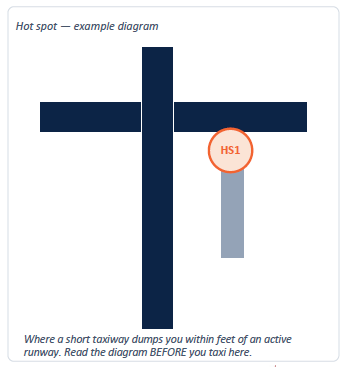
Runway incursion prevention requires stopping at every hold-short line, confirming the runway number painted on the surface, verifying clearance before proceeding, and maintaining situational awareness using the airport diagram — and any pilot who becomes unsure of position on a taxiway should stop, set the brake, and request progressive taxi from Ground.
Conclusion
A CFI who teaches LAHSO requirements and runway safety procedures rigorously gives students the decision-making framework they need to protect themselves and others from one of the most preventable categories of aviation accidents.
Departure Procedures: Clearance Delivery, Ground, and Tower
Summary:
A VFR departure from a towered airport follows a specific controller sequence that varies by airspace class, and each step in that sequence has specific read-back requirements that cannot be shortened or omitted. Getting the departure flow correct — from Clearance Delivery through Ground to Tower — is as important as the arrival, and it is where wrong-runway events most frequently begin.
Supporting Points:
A VFR departure from Class D requires only a Ground call; departures from Class C or B may require a Clearance Delivery call first to obtain a squawk code and departure frequency before Ground is contacted.
The initial Ground call includes aircraft type, current location on the airport, ATIS code, and stated departure intentions — providing this information upfront allows Ground to issue an efficient taxi clearance.
The taxi clearance read-back must include the assigned runway, the taxi route, and every hold-short instruction given — wrong-runway departures almost universally trace back to a missed or garbled read-back at this step.
At the runway, the Tower call includes aircraft call sign, current position, and departure request; Tower will respond with "hold short," "line up and wait," or "cleared for takeoff" — only the last of these authorizes the aircraft to roll.
Conclusion
Teaching the complete departure flow from pre-taxi call to takeoff clearance — including every mandatory read-back — gives student pilots the procedural discipline that keeps them out of trouble at unfamiliar towered airports.
Lost Communications: Squawk 7600 and Light Gun Signals
Summary:
A communication failure at a towered airport is not an emergency if the pilot knows the correct procedures — but it requires immediate, methodical action to verify the failure, notify ATC, and use the backup communication system that every tower has available. Light gun signals exist precisely for this scenario, and every pilot operating at a towered airport must have them memorized.

Supporting Points:
When communication is lost, the pilot should first verify it is a true failure by checking volume, headset, mic plug, comm radio, frequency, transmit selector, and audio panel, then try the secondary radio, the standby frequency, and the previous controller's frequency before declaring a comm failure.
Squawk 7600 alerts the controller that the aircraft has lost radio communication; the controller's scope will display a RDOF indication on the aircraft's tag, confirming the situation is known to ATC.
If landing is necessary, the pilot should fly a normal pattern at an altitude that allows visual contact with the tower cab and watch for light gun signals — steady green in flight means cleared to land, flashing green means return for landing, steady red means give way and continue circling, and flashing red means the airport is unsafe and the pilot should not land.
After landing with lost comms, the pilot should taxi clear of active surfaces, remain alert for uncoordinated traffic, and contact the tower by telephone — the number is published in the Chart Supplement.
Conclusion
A pilot who has internalized lost-comms procedures and light gun signals will respond to a communication failure with calm, methodical action rather than the confusion and hesitation that can turn a manageable situation into a dangerous one.
Common Mistakes: What Controllers See Most Often
Summary:
Controllers observe the same pilot errors repeatedly, and almost all of them are preventable with proper training and preparation. A CFI who addresses these mistakes directly — and teaches students why each one is dangerous — produces pilots who communicate professionally from their very first towered airport experience.
Supporting Points:
Assuming that "standby" or "aircraft calling" constitutes two-way radio establishment is one of the most common Class D entry errors — establishment only occurs when the controller uses the pilot's specific call sign in the response.
Using "roger" as a read-back is incorrect — "roger" means only "I received your transmission" and does not confirm that an instruction was understood or will be complied with.
Omitting the ATIS code from the initial call wastes ATC airtime and signals to the controller that the pilot is not fully prepared — always include "with information X" in the first transmission.
Crossing a hold-short line without an explicit clearance is a runway incursion, and even at unfamiliar airports it results in pilot deviation reports — no runway crossing, active or not, is ever authorized without a specific ATC clearance to do so.
Conclusion
Teaching student pilots not just what to do but also what not to do — and explaining the real consequences of each common mistake — is what separates an average ground briefing from the kind of instruction that actually changes behavior in the cockpit.

Topic Resources
Not a Power Hour Lesson Member?
Register for FREE, and Receive Weekly Webinar Access, Reminders, and Exclusive Offers!
Featured Product
Smart Study Pro Bundle

Description
A checkride-prep bundle designed to help learners hyperfocus their study efforts on each Area of Operation and Task within the ACS.
This bundle includes:
1. Private Pilot Smart Study Pro
2. Instrument Pilot Smart Study Pro
3. Commercial Pilot Smart Study Pro
4. Flight Instructor Smart Study Pro
